


Of course, a healthy diet is paramount for good health. The right balance of macronutrients (water, carbohydrates, fats, and proteins) and sufficient intake of micronutrients (vitamins, minerals, and trace elements) are particularly important. Compared to our hunter-gatherer diets, we now consume far too little protein and far too much sugar. The image below illustrates this.
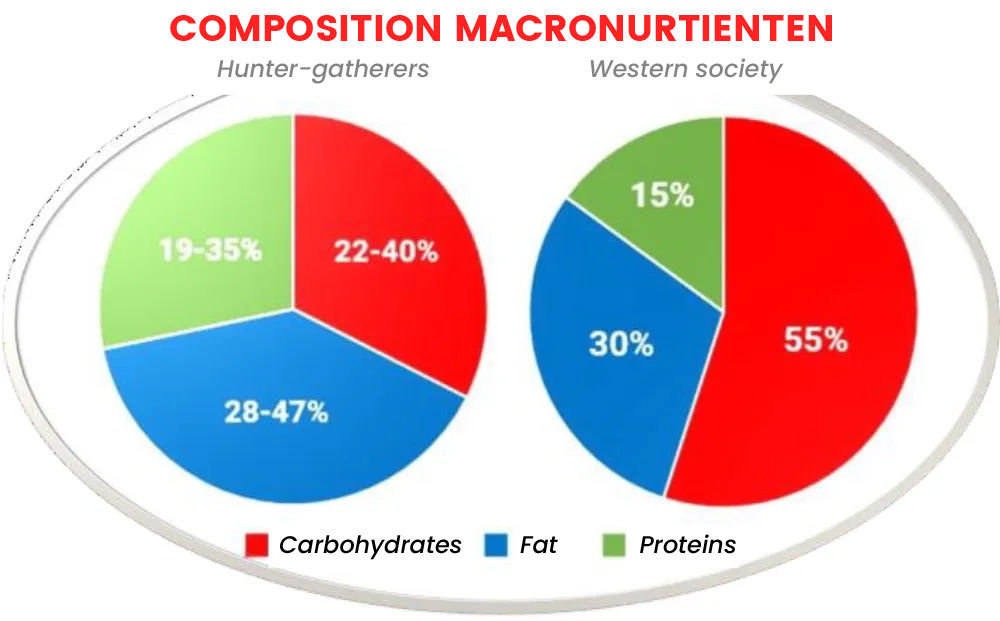
So we really should eat more protein. The average daily protein requirement for an adult is about 1 gram of protein per kilogram of body weight, depending on whether you exercise a lot, are ill, or need to recover.
The amount of protein we need to stay healthy depends on our age, body size, and daily activities. Excess protein intake is used as an energy source by the body. Protein is then broken down, forming urea.
What are proteins and why are they so important?
First, let’s take a look at what exactly proteins are.
Proteins are essential components of the body. They are found in every cell of the body. One-fifth of the body’s total body weight is made up of proteins, primarily in skeletal muscles, but also in the skin, blood, and organs. Proteins are made up of chains of amino acids linked together.
The composition, sequence and structure of the amino acid chains differ per protein.
This makes each protein unique. We can partially produce the building blocks of proteins, the amino acids, ourselves. The liver is a key organ for this. There are also important amino acids that we cannot produce ourselves and therefore must obtain from food. We call these the essential amino acids. There are 20 different amino acids, nine of which are essential.
Three of the essential amino acids are also classified as BCAAs (Branched Chain Amino Acids). These are leucine, isoleucine, and valine. They are also called anabolic amino acids. They are easily transformed into muscle tissue through activation of our mTOR system (a key regulator of cell growth and protein synthesis). These amino acids are not broken down in the liver but transported directly to the muscle and stimulate insulin release. These amino acids are found in abundance in dairy and meat.
We digest the proteins in plant and animal foods in our gastrointestinal tract. Proper stomach function and sufficient stomach acid are essential for this process. We break down the proteins in food into their building blocks, the amino acids, which we then, according to our own genetic makeup (our genetic material), string together into the various proteins that are essential for our bodies. We produce over 20,000 different types of endogenous proteins.
Proteins are important:
- As a building block of hormones such as insulin and thyroid hormone
- As a building block of neurotransmitters such as serotonin, dopamine, adrenaline and the calming neurotransmitter GABA gamma-amino-butyric acid
- As a building block of our sleep hormones such as melatonin and valentin
- As building blocks, all enzymes are originally proteins. Enzymes are important for many regulatory processes, including digestion and defense.
- As a building block of connective tissue such as collagen, a glue-forming protein
- As a building material of muscle tissue
- As a transporter of e.g. oxygen, cholesterol and iron
- As a detoxifier in the liver
- As an antioxidant, such as
- As a nitrogen supplier for us, for example
Is there a difference between plant and animal proteins?
Plant-based and animal proteins both provide essential building blocks for a healthy body. However, these protein sources differ, which determines how well your body can utilize them for various bodily processes.
Animal proteins generally have a higher digestibility and biological value, which means that the body can more easily use these proteins to produce its own protein.
Animal proteins typically contain all nine essential amino acids in the correct proportions, making them considered “complete” proteins.
Another important difference between plant-based and animal-based protein sources is the other nutrients found in these products. For example, animal-based sources (meat and fish) often contain more fat, omega-3 fatty acids, vitamin B12, iron, and zinc. Plant-based proteins often contain more fiber, antioxidants, and phytonutrients (such as resveratrol, quercetin, and curcumin).
Protein supplements
If you choose a protein supplement, it’s wise to always pay attention to the amino acid composition and any additional ingredients such as maltodextrin, lactose, sugar, fats, E-numbers, etc. There are different types of protein supplements.
Solubility, absorption rate, amino acid profile, protein content, other nutritional values, taste and price are factors that can make a protein powder good or bad.
- Whey concentrate: Whey concentrate is derived from milk, whey concentrate consists of approximately 80% It has a favorable amino acid profile for muscle recovery and building and muscle tissue synthesis.
- Whey isolate: When you further purify concentrate, you create an even purer form of whey: isolate. The powder contains more protein than concentrate and is made up of more than 85 percent whey. Another advantage of purification is that isolate contains fewer carbohydrates (including lactose), as well as fats and fiber.
- Casein: Casein is also a protein derived from milk. After pasteurizing and skimming the milk, the remaining skimmed milk is broken down into whey proteins and casein. Casein contains 80% protein (primarily from the solid form of the skimmed milk) and differs in amino acid composition from whey protein. It also digests more slowly than whey protein and takes longer to be absorbed into the body. Therefore, casein can be a good option to take in the evening to maintain muscle synthesis during sleep and contribute to muscle building.
- Rice protein: Rice protein is made from whole, sprouted rice grains. It’s gluten-free, low in carbohydrates and fat, and easily digestible. It contains all the essential amino acids, but is low in iron. Furthermore, rice protein powder is rich in fiber, which has many health benefits.
- Pea protein: Pea protein powder is made from yellow rice. It’s high in fiber and easy to digest. It contains all the essential amino acids, but is virtually free of cysteine and methionine. Pea protein powder does contain a lot of lysine, which rice protein lacks.
- Soy protein: Soy protein powder is derived from soy and contains all nine essential amino acids, making it a complete protein source. Soy protein contains isoflavones, which can have a beneficial effect on the “female hormone” estrogen.
- Quinoa protein: Although we primarily eat it as a grain, it’s actually a seed. It’s related to spinach and sugar beets. Quinoa can serve as a base for meals, just like brown rice or whole-wheat couscous. Quinoa protein powder is a source of protein that contains all the essential amino acids.
If you eat a healthy and varied diet, you usually already get all the protein you need. For the elderly, athletes, people experiencing chronic stress, and those with chronic illnesses, supplementing with additional protein can be beneficial.